Reduce the risk of developing skin cancer
The Danish Research Center for Skin Cancer is a member of the Danish Sun Safety Group, an expert panel that provides guidance on the health effects of sun exposure and recommendations on how to best protect yourself and your children from harmful ultraviolet (UV) radiation.
In addition to the Danish Research Center for Skin Cancer, the group includes representatives from the Danish Dermatological Society, the Ministry of Environment and Gender Equality, the Danish Safety Technology Authority, the Danish Health Authority, the Danish Meteorological Institute, and the Danish Cancer Society.
Below are the most important sun protection recommendations in brief. If you would like to learn more, you can find the Sun Safety Group’s fact sheets in the download menu on the right.
How to use sunscreen correctly
- Use sunscreen with at least SPF 30, both in Denmark and in sunnier climates.
- Look for broad-spectrum protection, which protects against both UVA and UVB rays.
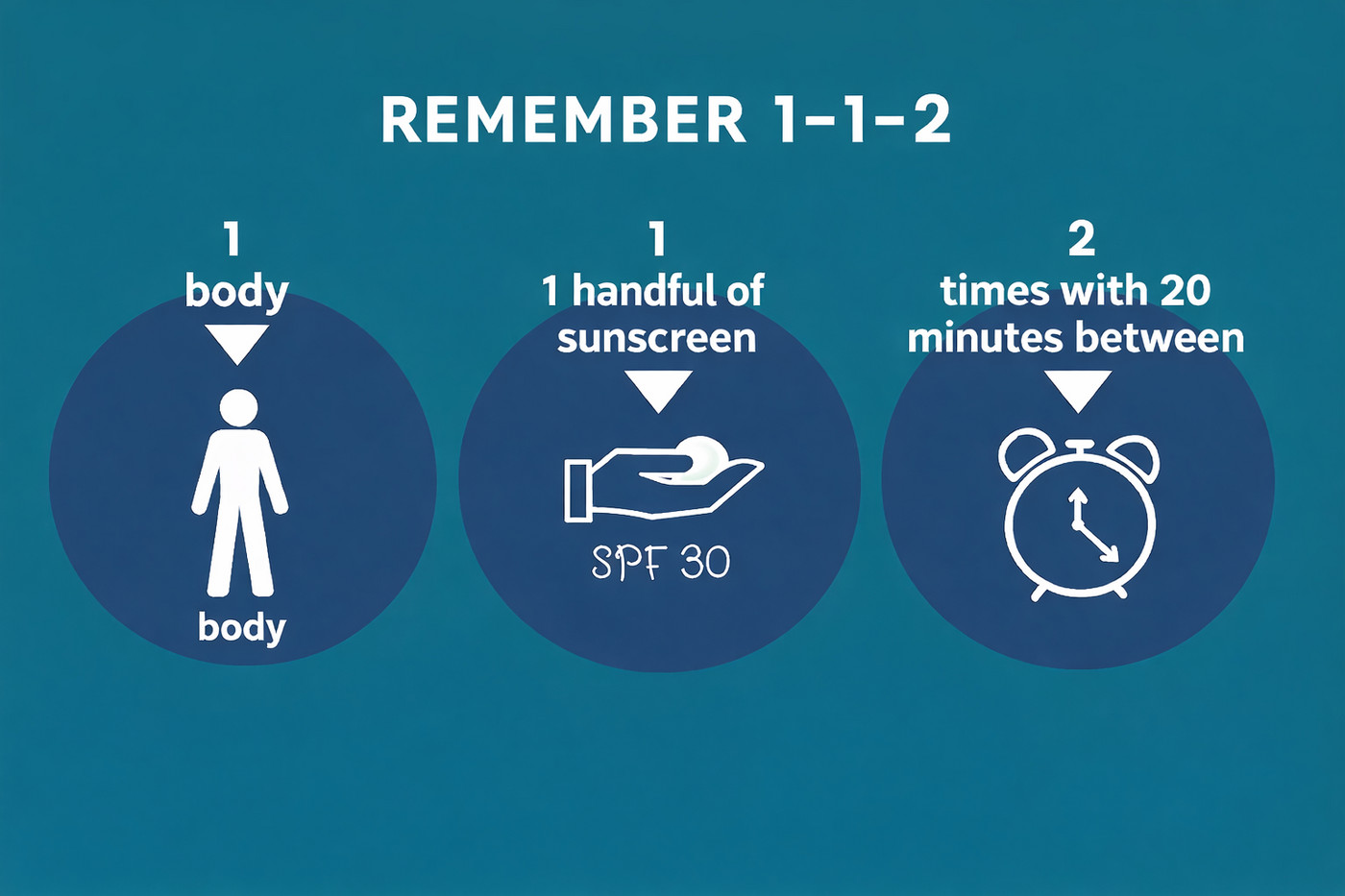
- Apply a generous amount - approximately one handful (about 40 mL) for full-body coverage in an adult.
- Using less significantly reduces protection.
- Apply sunscreen twice, with about 15 minutes between applications, to ensure adequate coverage.
- Remember to apply sunscreen to the ears and lips.
- Reapply after swimming, sweating, or towel drying.
Test your knowledge - myths about sun exposure and sun protection
Fact
People with darker skin have some natural protection, roughly equivalent to SPF 13, but they can still develop sunburn, pigment changes, and skin cancer.
Sunscreen is therefore recommended for all skin types. The difference is that people with fair skin need protection sooner and more frequently.
Fact
On the contrary, if you have had skin cancer or precancerous lesions, your risk of developing skin cancer again is significantly higher.
Consistent use of sunscreen and shade reduces the risk of new lesions and protects against further sun damage.
Fact
Even without sunburn, UV radiation can damage the DNA in skin cells and increase the risk of skin cancer over time.
A tan is a sign that the skin has already been damaged. There is no such thing as a “healthy tan.” When the skin darkens, it is a protective response. UV radiation stimulates skin cells to produce more melanin, which helps protect DNA from further UV damage. This process indicates that damage has already occurred.
A tan is therefore not a sign of health, but a sign that the skin has responded to injury from UV exposure.
Fact
They provide important protection, but not complete protection. Thin fabrics such as cotton, linen, and viscose generally provide less protection than tightly woven fabrics such as wool and polyester. Studies have shown that up to one-third of typical summer clothing does not provide adequate UV protection.
UV-protective clothing and hats (UPF-rated clothing) are now widely available and can provide protection comparable to sunscreen. However, exposed areas such as the face and hands should still be protected with sunscreen.
Not all shade provides equal protection. Up to 80% of UV rays can penetrate clouds and UV levels may remain high even on cloudy days. Thin clouds, sitting under a single tree or using a small beach umbrella may not provide sufficient protection from indirect UV radiation reflected from surfaces such as sand and water.
Use sunscreen daily when the UV Index is 3 or higher, which in Denmark typically occurs between April and October.
Fact
Sunscreen has an expiration date and may lose effectiveness over time. Most unopened sunscreens remain effective for 2-3 years if stored in a cool, dry, dark place.
Once opened, sunscreen should generally be used within 12 months. Discard sunscreen if it separates, changes color or consistency or develops an unusual odor.
Fact
Standard window glass blocks most UVB rays, which cause sunburn, but still allows most UVA rays to pass through.
UVA rays penetrate deeper into the skin and contribute to skin aging, pigment changes, and increased skin cancer risk. This means you may still be exposed to UV radiation when sitting near a window at home, at work, or in a car.
Fact
You do not need to avoid sunscreen to maintain adequate vitamin D levels. Even when using sunscreen, some UV radiation reaches the skin, which is sufficient for vitamin D production during the summer months.
You can protect your skin and still maintain healthy vitamin D levels without increasing your risk of skin cancer.
How SPF (Sun Protection Factor) works
SPF indicates how much longer skin is theoretically protected from sunburn when sunscreen is applied correctly, compared with unprotected skin. It is based on measurements of how much UV radiation is required to cause redness in protected versus unprotected skin.
An SPF 30 sunscreen means that it would theoretically take 30 times more UV exposure for skin to burn, assuming proper application.
However, actual protection is often lower because most people apply less sunscreen than recommended. An adult needs approximately 40 mL (1.3 fl oz) of sunscreen for full-body coverage.
SPF 30 sunscreen blocks approximately 97% of UVB radiation, but this level of protection depends on proper application and adequate quantity. Studies show that people typically apply only 20–50% of the recommended amount. Applying sunscreen twice improves coverage and protection.
UV intensity varies throughout the day, so sun protection cannot be based solely on time spent outdoors. For example, morning sun may be weaker, while midday sun is much stronger and increases the risk of sunburn more quickly.
There are two main types of sunscreen filters:
- Chemical filters, which absorb UV radiation
- Mineral (physical) filters, which reflect and scatter UV radiation
Both types provide effective protection when used correctly.
Tinted sunscreen can be a useful addition because it also protects against visible light and high-energy visible (HEV) blue light, which contributes to pigment changes such as dark spots.