AID-BCC (AI-Assisted diagnosis of Basal Cell Carcinoma)
Basal cell carcinoma (BCC) is the most common type of skin cancer, accounting for approximately 80% of all skin cancer cases. Today, diagnosis typically relies on clinical examination, dermoscopy and biopsy. There is a growing need for non-invasive methods that can support lesion assessment and make the diagnostic pathway more efficient for patients.
The project examines the clinical usability of three advanced, non-invasive imaging techniques: optical coherence tomography (OCT), line-field confocal OCT (LC-OCT) and high-frequency ultrasound (HFUS). Each technique includes an integrated artificial intelligence (AI) module that can support image interpretation.
The study is prospective and observational and is conducted at the Department of Dermatology, Bispebjerg Hospital. The examinations are non-invasive and do not affect patients' subsequent treatment. The aim is to determine how long each method takes, how practical it is to use, how good the image quality is, and how well AI-assisted imaging agrees with histological findings.
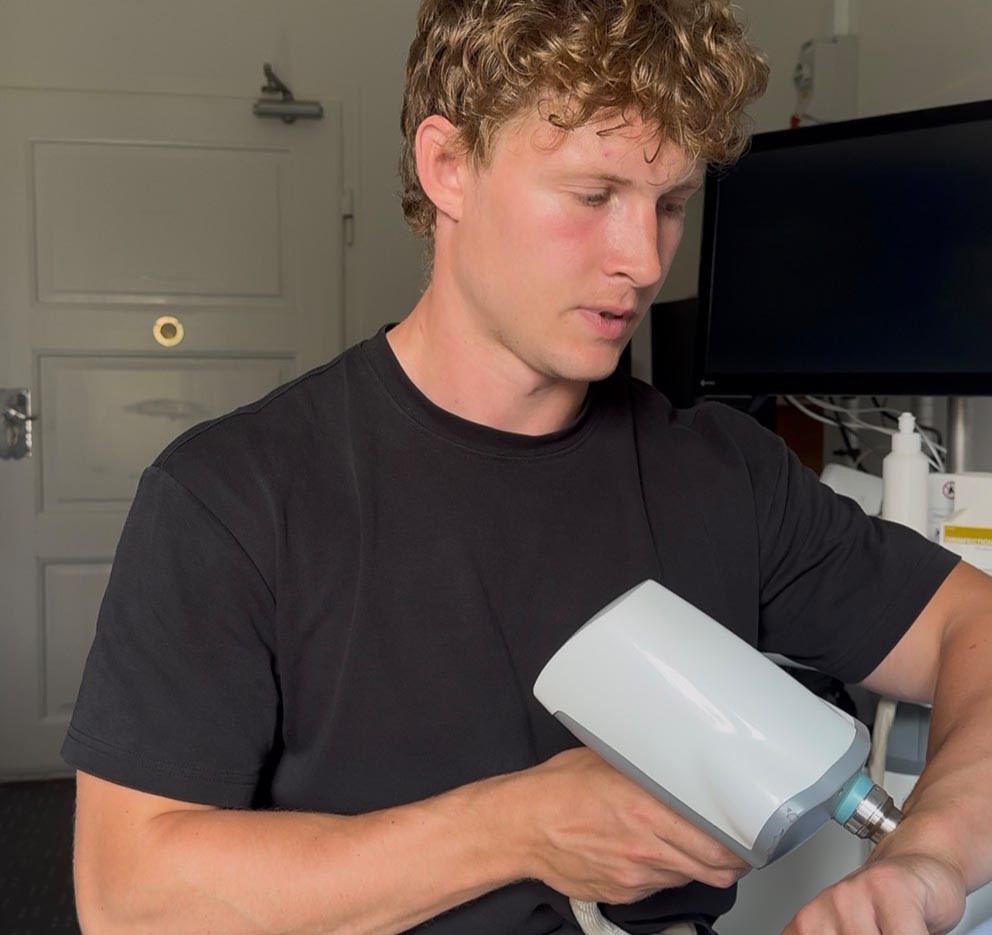
Researcher
Physician and PhD student Otto Dideriksen
Project Supervisors
Professor and Chief Consultant Merete Hædersdal, MD, PhD, DMSc
Vinzent Kevin Ortner, MD, PhD
Kevin Jacobsen, MD, PhD
Peter Alshede Philipsen, MSc, PhD
Project period
2026 – 2028
Financing
Danish Research Center for Skin Cancer
Bispebjerg Hospital’s Internal Research Fund
Aage Bangs Fond
Selected publications
Dideriksen O, Jacobsen K, Untracht GR, Philipsen PA, Haedersdal M, Ortner VK. AI-Assisted Basal Cell Carcinoma Analysis in Line-Field Confocal OCT Exploring Diagnostic Metrics. J Biophotonics. 2026 Oct;19(10):e70374.