Close study of data on income and distance to dermatologist provides new insight into skin cancer
Tumor size increases with distance to dermatologist
About the study, Chief Physician, Professor, and Head of Research at the Danish Research Center for Skin Cancer, Merete Hædersdal, says: “Processing data in this way gives us a more detailed understanding of the epidemiology of skin cancer. The fact that tumor size at the time of diagnosis increases with distance to a dermatologist may indicate that some people see a doctor later than others—perhaps due to inconvenience or waiting times. To address this challenge, it’s important that we consider potential solutions from a broad perspective, so the solutions are long-term and not unsustainable quick fixes.”
Innovation should lead to shorter and better patient journeys
Merete Hædersdal elaborates: “The current patient journey, where patients must be seen by a doctor several times and often need a biopsy before a diagnosis can be made and treatment started, results in uncertainty for some patients and many consultations. We need to work toward a process that is both more reassuring for patients and more efficient. It may sound utopian, but it’s not.
One of the solutions we are developing at the Danish Research Center for Skin Cancer is the simplification of the patient journey. We are working on methods where the patient can be examined, diagnosed, and receive initial treatment in a single consultation—without the need for a biopsy.”
Less inconvenience and shorter waiting times
“With the new method, the patient journey will, in most cases, be shorter and the experience better. This is important to ensure safe and reassuring patient journeys regardless of income level. At the same time, this more efficient way of working will free up consultation slots. In this way, it is possible to reduce inconvenience for patients and shorten waiting times, while maintaining, or even improving, the quality of treatment.
It’s about doing things differently, rather than just doing more of what we already do. The method is under development, and it is realistic that it could be ready for initial rollout in the foreseeable future,” concludes Merete Hædersdal.
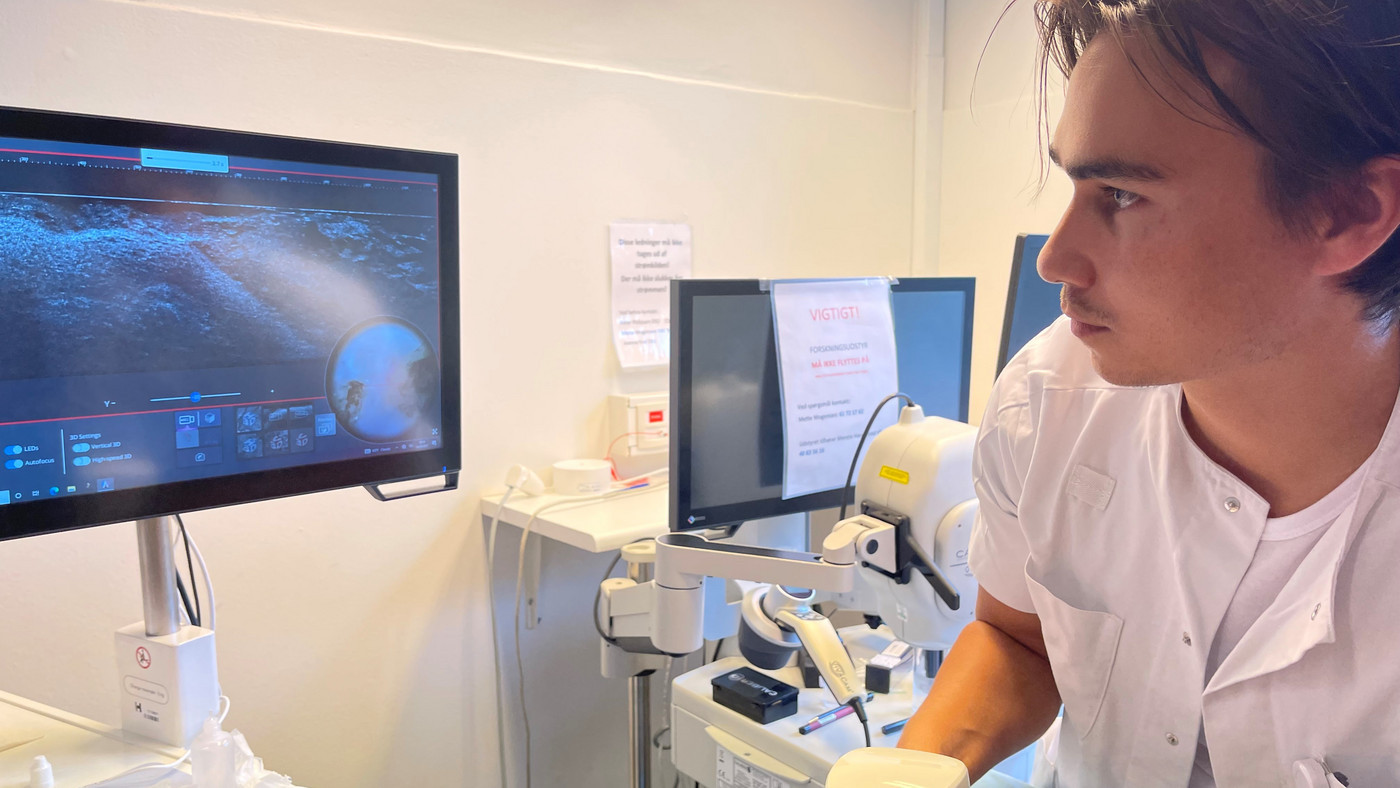
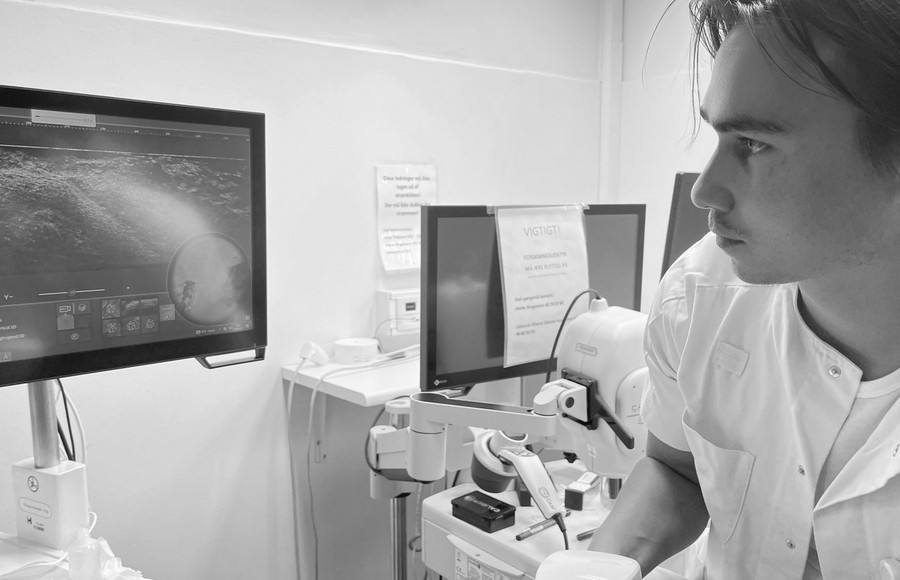
Innovation, e.g. scanning in stead of biopsy can take the pressure off dermatologists.
Insights from the study
When comparing data, the researchers found the following:
- The number of new cases of skin cancer in the group of citizens with the highest income was twice as high as in the group with the lowest income.
- Tumors were nearly 10 percent smaller at the time of diagnosis among those with the highest income.
- New cases of skin cancer diagnosed decreased by 15% for every additional 10 kilometers people lived from a dermatologist.
- Regarding tumor size at the time of diagnosis, there were differences depending on the type of skin cancer. Tumors of the basal cell carcinoma type were on average 8.1% larger for every 10 kilometers of increased distance, while the distance to a dermatologist did not affect the size of squamous cell carcinoma tumors.
Scope of the study
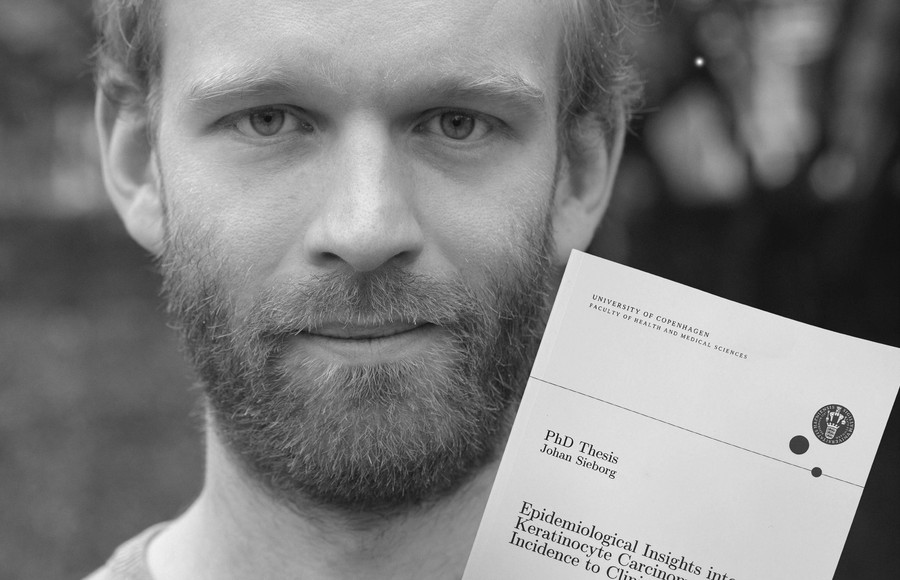
The study, conducted by PhD student Johan Sieborg under the supervision of Merete Hædersdal, is based on data from the Skin Cancer Database from 2013–2022. It includes data from approximately 100,000 patients and nearly 190,000 cases of keratinocyte cancer treated in specialist practices across Denmark.