What does a skin cancer lesion look like – and what biological processes are taking place in the skin at the same time?
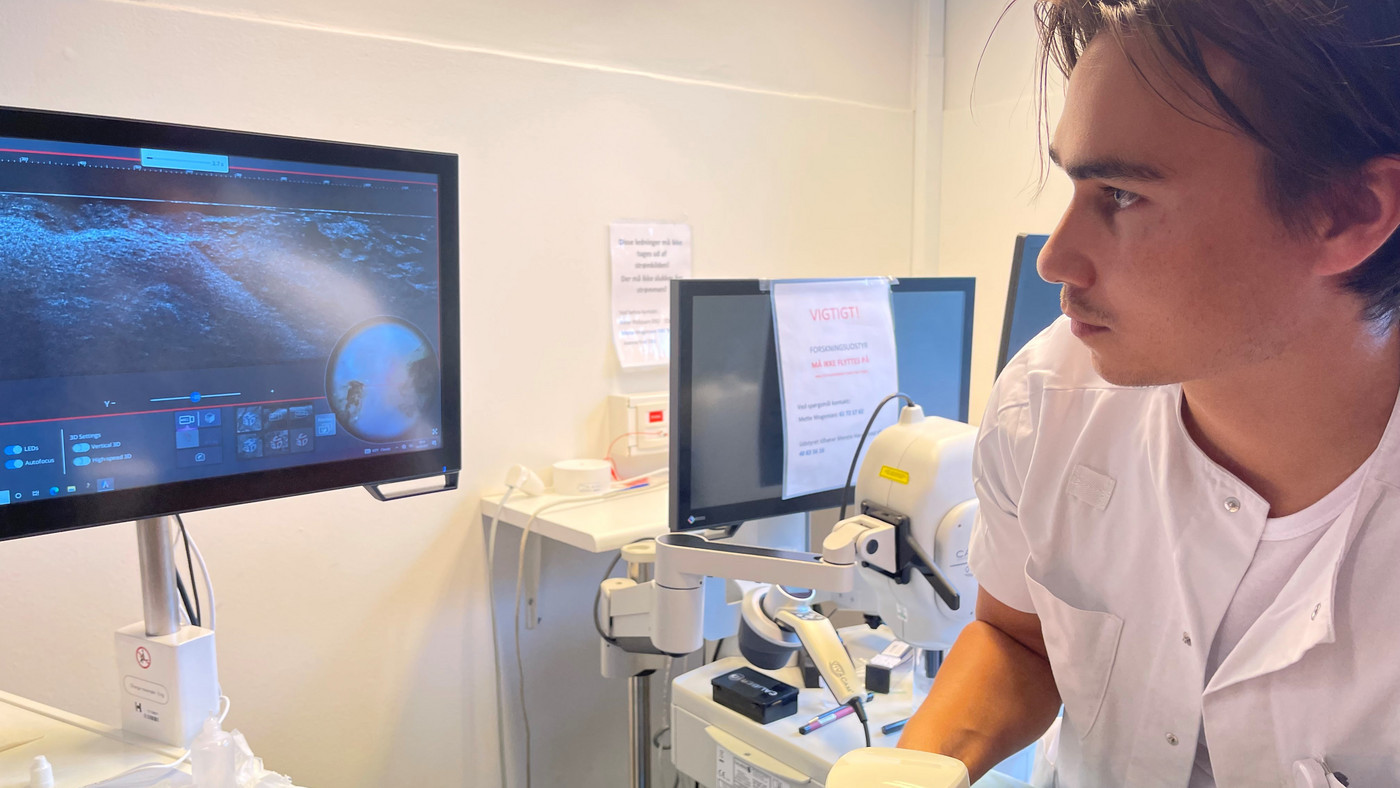
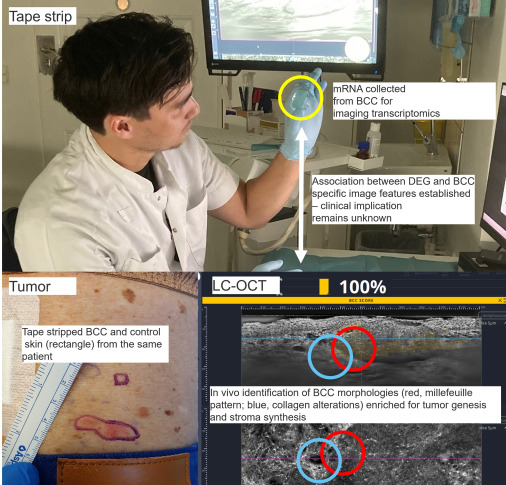
The researchers have been working on combining non-invasive imaging using line-field confocal optical coherence tomography (LC-OCT) with gene activity analysis using tape stripping to study basal cell carcinoma.
Towards personalised treatment
LC-OCT provides detailed images of the skin’s structures at different depths. The technique makes it possible to examine the skin without first cutting into it, as is necessary when taking a conventional tissue sample or biopsy.
Tape stripping involves applying a piece of adhesive tape to the skin and then removing it. The tape collects material from the skin’s surface, which can subsequently be analysed to investigate gene activity.
The aim of combining LC-OCT and tape stripping is to determine whether molecular information can be obtained from the skin’s surface while simultaneously acquiring detailed images of the same area.
Tape stripping has already been used in research into other skin conditions, including eczema. However, it has never previously been combined with LC-OCT to investigate basal cell carcinoma.
By combining the two methods in a single analysis, researchers can compare the structures they observe in the skin with information about which genes are active in the area being examined.
By correlating imaging findings with analyses of the tumour’s molecular activity, the researchers hope to gain a deeper understanding of the biological mechanisms involved in basal cell carcinoma.
This approach could, among other things, make it possible to investigate whether specific molecular signals can be linked to the structures observed in LC-OCT images.
“In the longer term, this type of knowledge could potentially contribute to research into how skin cancer develops and how the disease can be investigated and treated. However, further research is needed before any firm conclusions can be drawn about the method’s clinical applications,” says Kevin Jacobsen, a physician at the Danish Skin Cancer Centre.
A first step
The research was carried out through a collaboration between the Danish Skin Cancer Centre and the Department of Forensic Genetics at the University of Copenhagen, with contributions from, among others, Niels Morling and Jeppe Dyrberg Andersen and their teams.
The researchers describe the work as an early step towards developing a new approach to investigating basal cell carcinoma.
The research project was supported by the Aage Bang Foundation.