A new study will investigate differences between sun-exposed and sun-protected skin in younger and older men and women.
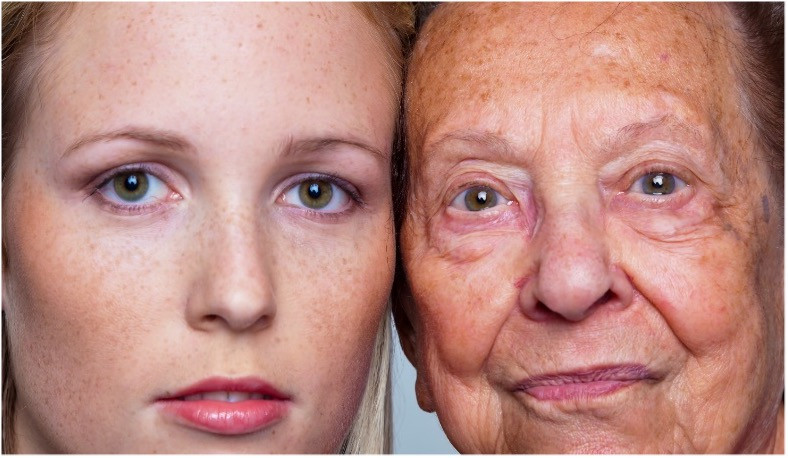
Skin ageing manifests itself in several ways, including changes in elasticity, pigmentation, wrinkles and tissue structure. The new research project aims to investigate molecular differences in the skin of younger and older individuals, men and women, as well as sun-exposed and sun-protected skin.
Andrea Heinz, PhD, Associate Professor at the University of Copenhagen, will conduct the study in collaboration with Catharina Lerche, Associate Professor at the Danish Knowledge Centre for Skin Cancer. Together, they will investigate how sunlight and hormones affect the structure and biology of the skin.
Seeking volunteers
The project involves skin biopsies, blood samples and advanced analyses of skin cells, proteins and tissue structure. The researchers are therefore currently recruiting volunteers to participate in the study.
The skin samples will be analysed to identify changes in tissue structure, proteins such as collagen and elastin, and the presence of senescent cells. In addition, skin elasticity, pigmentation and surface structure will be measured, while participants' sex hormone levels will be assessed through blood samples.
By comparing these findings, the researchers aim to investigate how hormonal factors and sun exposure are associated with biological skin ageing, and whether measurable differences can be identified between women and men.
Research and prevention
The findings may have implications for how we can better prevent UV-related skin cancer and sun damage in the future, says Catharina Lerche:
"It will be exciting to see what differences can be identified in the skin's biochemistry between younger and older individuals, men and women, and sun-exposed and sun-protected skin."
Facts
The project investigates skin ageing through small skin biopsies, blood samples and various laboratory analyses.
The researchers are currently recruiting participants with a history of extensive sun exposure from the following groups:
- Young women (18–30 years)
- Older women (55–70 years)
- Young men (18–30 years)
- Older men (55–70 years)
All participants must be willing to undergo four 4 mm skin biopsies: two from sun-protected skin (buttock) and two from sun-exposed skin (arm), as well as a blood test and measurements of skin elasticity.
Participation is voluntary, and participants will receive compensation of DKK 2,000.
Interested in participating?
Please contact:
Medical student Sara Saunte: sara.karoline.saunte@regionh.dk
or
Medical doctor Harisankar Anantharajan: harisankar.anantharajan@regionh.dk
Please make sure to include your full name and telephone number in your email.