Project on Vitamin B3 and Fern Extract for Sun Protection Enters Final Phase
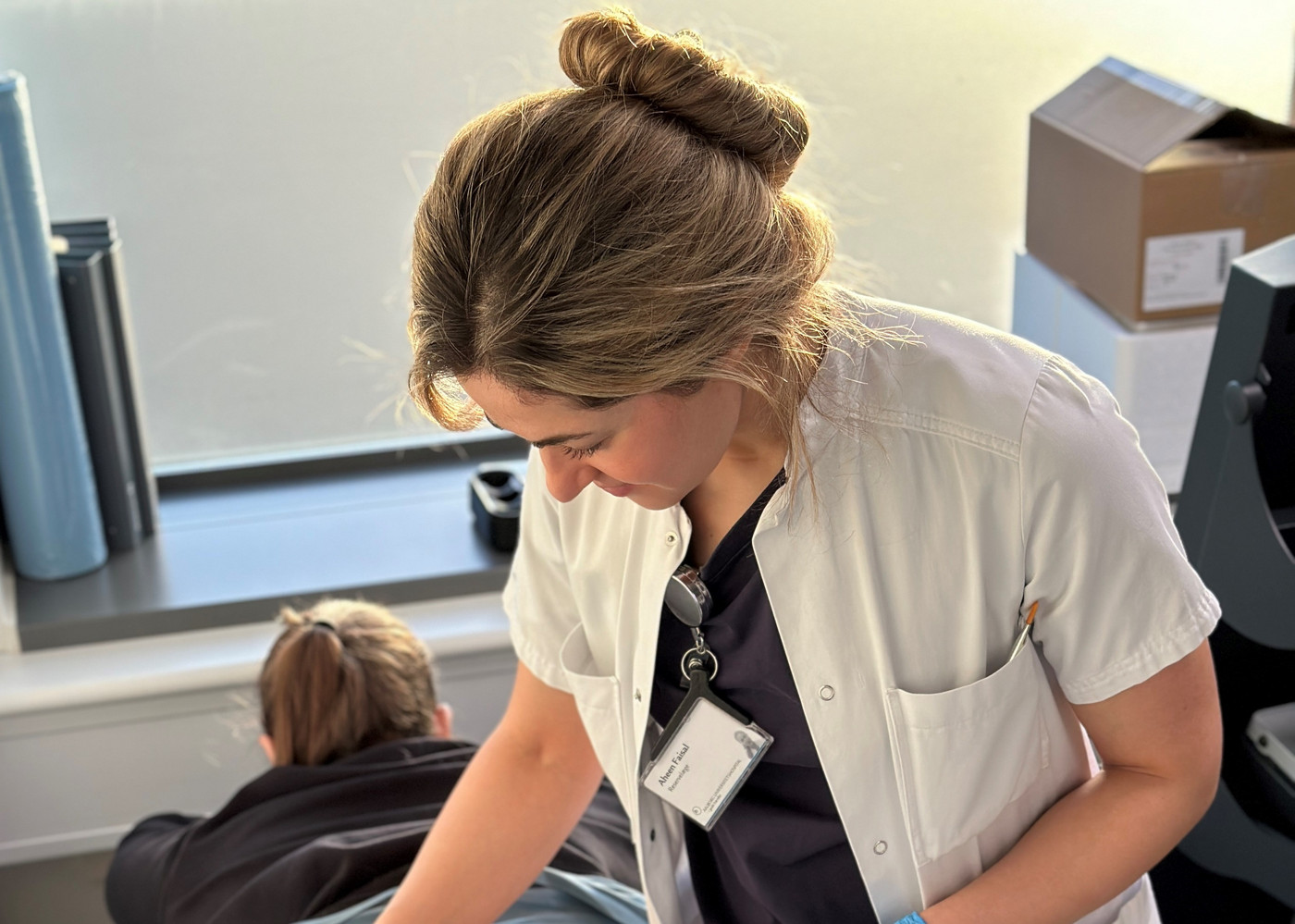
Aheen has tested whether nicotinamide and Polypodium leucotomos can enhance the skin’s protection against the sun’s UV rays when taken as dietary supplements.
Nicotinamide is vitamin B3and known for promoting skin health and supporting DNA repair in the body. Polypodium leucotomos, a Central American fern extract, is currently used in supplement, often combined with green tea and betacarotene, to help protect the skin from harmful sun rays.
UV rays affect skin in more ways
In her project, Aheen tested the effects of these two supplements against both UVB and UVA rays.
UVB light affects the skin’s surface and can cause sunburns and directly induce DNA damage, which may lead to skin cancer. UVA light penetrates deeper into the skin and induces oxidative stress, which can indirectly cause DNA damage. UVA also darkens the skin and contributes to skin aging. The degree of DNA damage in the skin, or rather the body’s repair of the damage after UV exposure, can be measured in urine.
50 participants in each trial
In each of the two trials, one with UVB light and one with UVA light, the sun-protective effects of nicotinamide and polypodium leucotomos were tested on 50 individuals. UV-induced redness and the degree of DNA damage in the skin and urine were measured before and after 30 days of treatment with nicotinamide and polypodium leucotomos.
The clinical trials are now completed, and the data has been analyzed. The results of the project and the trials are very interesting and will be published shortly.
The project was conducted under the supervision of Associate Professor Stine Wiegell, in collaboration with Associate Professor Catharina Lerche, Professor Peter Bjerring and Professor Merete Hædersdal.