When kidney-transplanted Claus also developed skin cancer, a chief physician at the dermatology department at Bispebjerg Hospital assured his inner calm
Kidney failure and nightly dialysis for 3 years
When Claus was told he needed a new kidney, he wasn’t surprised. He already knew he was predisposed to a hereditary kidney disease and had struggled with kidney stones for years. However, his kidney function was now down to about 10 %, and dialysis treatment had to be initiated immediately to cleanse his blood of waste products that the kidneys normally filter out. In Claus’ case, home hemodialysis was possible, so he was equipped with a dialysis device for use at home.
Despite the advantage of being in his own home, home hemodialysis is a complicated process that takes 8 hours every night. Many of those hours are spent awake, as alarms go off if you accidentally lie on the tubes. Claus underwent dialysis for 3 years.
To handball in Germany with the dialysis machine in the back seat
Instead of letting the disadvantages of home hemodialysis limit him, Claus chose to focus on the possibilities. He was pleased that the portable machine allowed him to continue participating in important client events he organized for Sparinvest in Germany, in connection with a sponsorship of the handball club SG Flensburg-Handewitt. It wasn’t easy, but he was determined and regularly drove off with the dialysis machine and boxes of treatment fluids in the back seat.
A new kidney and melanoma and skin cancer as a bonus
After 3 years of dialysis, Claus received a kidney transplant. This involved many hours of surgery, 30 days of hospitalization, and a large amount of medication in pill form. Twice, the new kidney was close to being rejected, and Claus received immunosuppressive treatment.
In connection with transplants, it’s necessary to suppress the immune system, as the body would otherwise reject the transplanted organ. It’s likely this immunosuppressive effect also affects the skin. If you have many sun-damaged areas, they can develop into skin cancer because the body can no longer fight the cancer cells. And since Claus has been a sun lover all his life and enjoyed outdoor sports, he has developed melanoma twice and continuously struggles with common skin cancer.
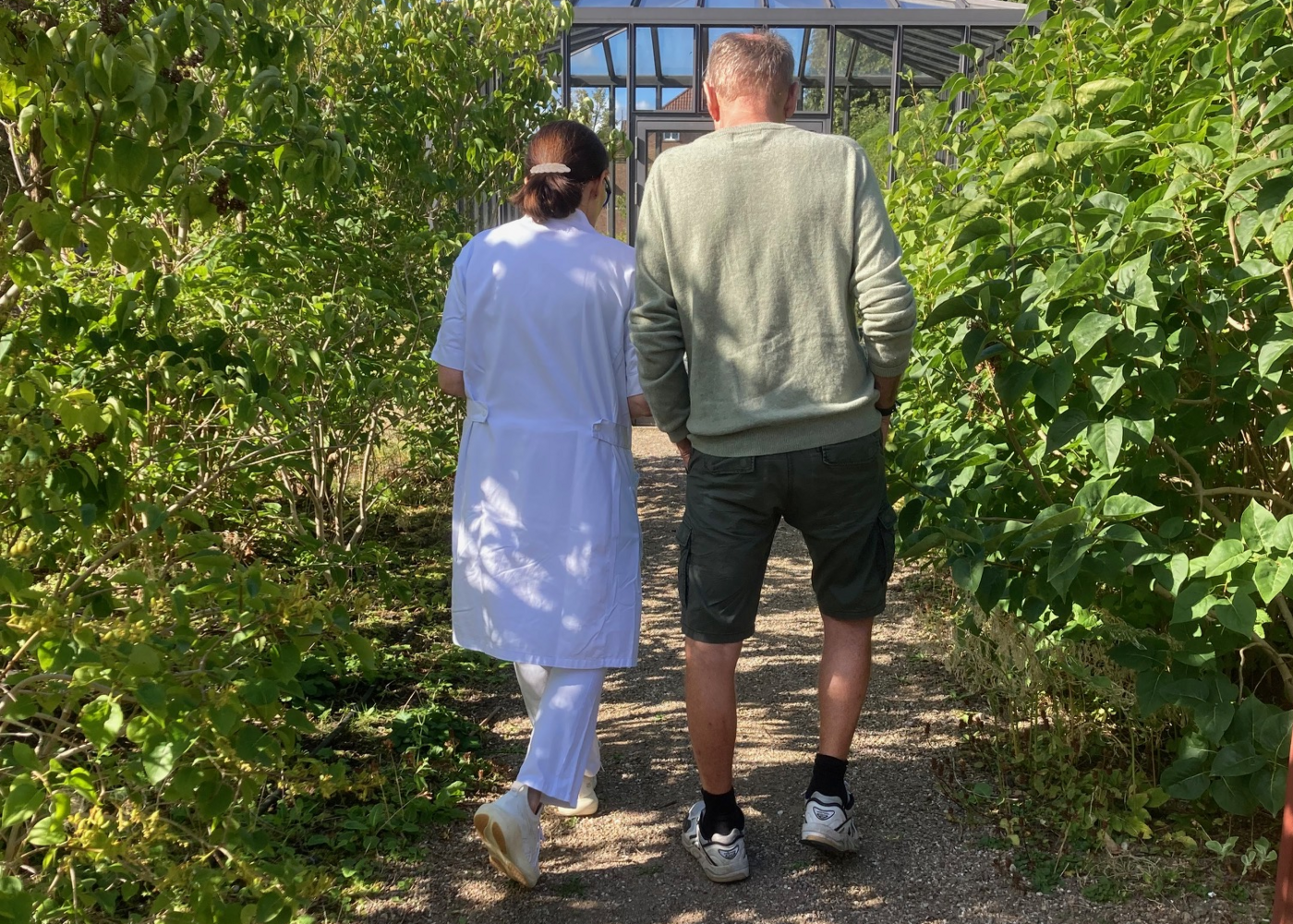
On the way to PDT treatment in the glass pavilion at the dermatology department at Bispebjerg Hospital Claus' latest bicycles adventures are discussed.
Anchor person and good relationship create emotional security
“I love the sun, but now I protect myself in every possible way. The skin cancer is worrying. I know I’m particularly vulnerable. That’s why I’m also very grateful for the good collaboration I have with the doctors at both Bispebjerg Hospital and Herlev Hospital.
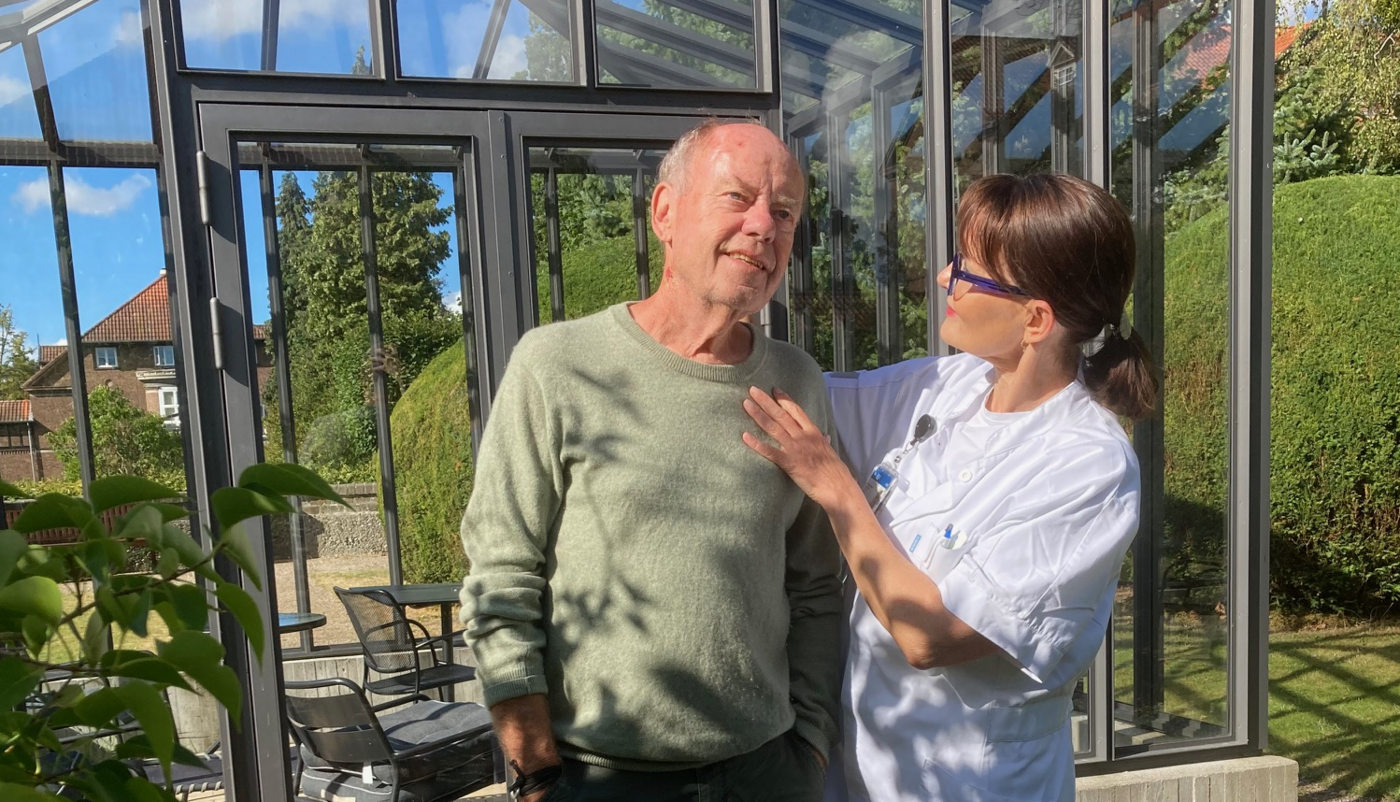
I’m seen by Merete Hædersdal at the dermatology department at Bispebjerg Hospital every three months. She knows my history, and she is my anchor person who creates security and continuity in the treatment. She listens attentively and is welcoming when I’m worried or anxious. That means I have full trust in her and the treatment, and I always follow her advice and instructions. It brings peace and is crucial for both my mental well-being and physical health,” Claus says about his experiences at the dermatology department at Bispebjerg Hospital.
And he elaborates: “Both dialysis and transplantation change your life, and you start to doubt whether your life can continue normally at all. On top of that come secondary illnesses with symptoms and treatments you also have to deal with. The skin cancer bothers me. I often have sores, and the treatment isn’t exactly pleasant either. But you have to see it positively -that you’re being offered help - and use it in a good way, so you don’t see yourself as a helpless victim. And that’s where it means everything to have a doctor who creates continuity and makes you feel safe.
It has to be a doctor you can also talk to about the positive things that give you energy and strength. For example, I talk to Merete about cycling. It motivates me to reach over 150 km every week, all year round. I can’t show up having done worse than last time,” Claus says with a laugh.
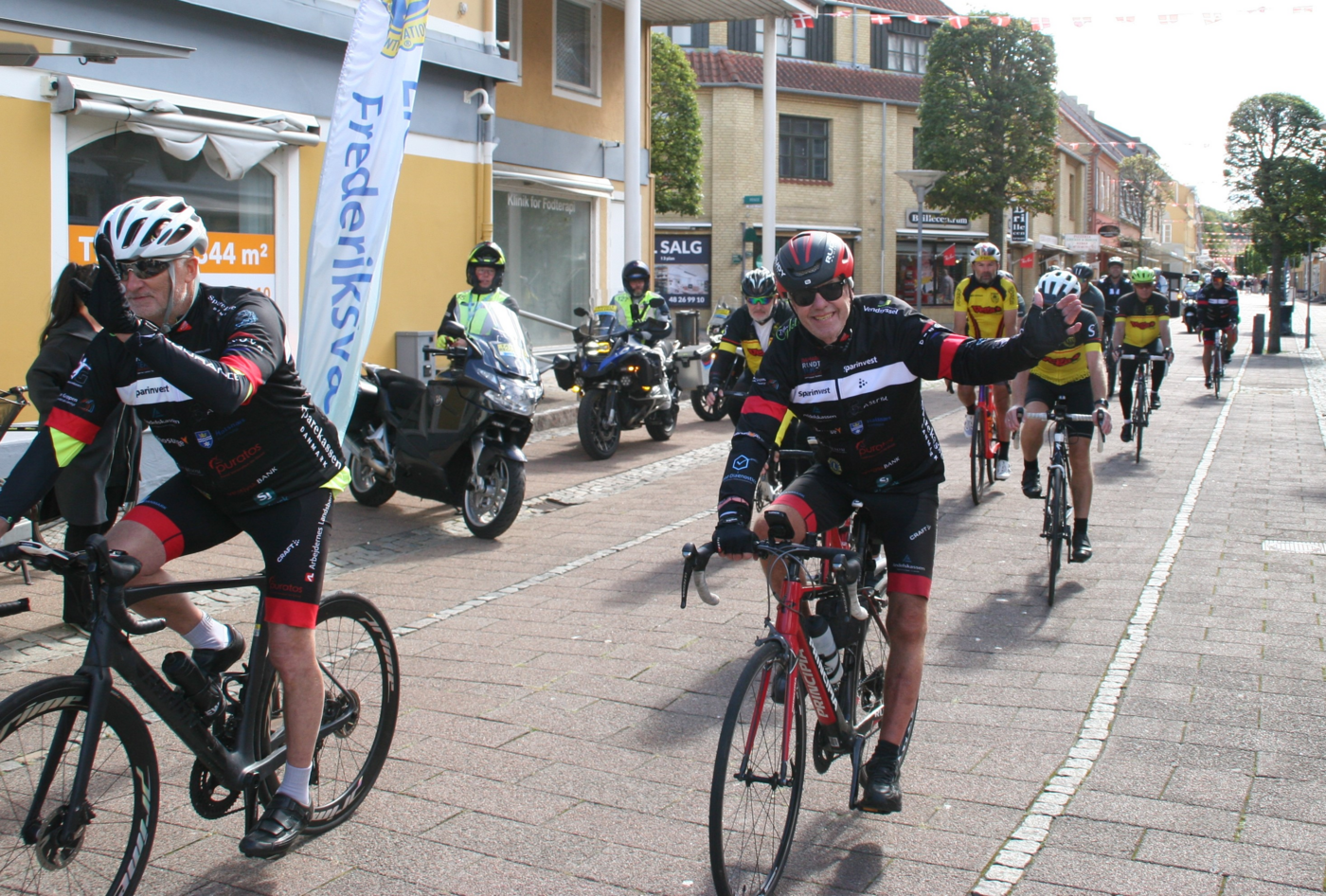
Danmark Rundt Team Bodenhoff for Børnecancerfonden collects money for families affected by cancer. Claus participates every year.
Photo: Journalist Thomas Quvang
Important to ensure safety and continuity for patients
Merete Hædersdal finds it of vital importance to create strong and safe patient experiences: “It’s important to us that we provide strong support for people going through complex treatment journeys. Organ transplant recipients, like Claus, are particularly vulnerable. Receiving a new organ is lifesaving on one hand, but on the other hand, it’s tough - both physically and mentally. When you then also develop recurring skin cancer and must deal with the symptoms and worries that come with it, it can be hard to cope with everything. That’s why we do what we can to create continuity, human to human communication, help navigate the many treatments and ensure a safe experience throughout.
At the dermatology department at Bispebjerg Hospital, we are able to do this because we have very strong competencies and extensive experience. For example, in collaboration with the Danish Research Center for Skin Cancer, we have a special program for organ transplant recipients. It’s led by chief physician and clinical lecturer Stine Regin Wiegell, who also conducts research in photodynamic therapy for skin cancer. The main part of the Research Center is also based here at the hospital. The researchers at the center are actively involved in the clinic’s work and take a holistic approach to patients, constantly working to improve treatments and develop new ways to prevent, diagnose, and treat.”
Helping others who are worse off
Claus has truly chosen not to become a victim of his condition. He enjoys traveling and has chosen to help others who are worse off than himself. Charity work has always been part of his adult life, and with his passion for cycling, Claus helped establish “Denmark Tour Team Bodenhoff for the Children’s Cancer Foundation” in 2014.
The team, supported by several well-known athletes and musicians, cycles to raise money for families of children with cancer, and Claus himself participates every year. Only in 2021, right after his transplant, did he not cycle. Instead, he was “firmly placed in a support vehicle and managed the event from there. We still had to help those who were worse off than me,” as he says with a smile.